

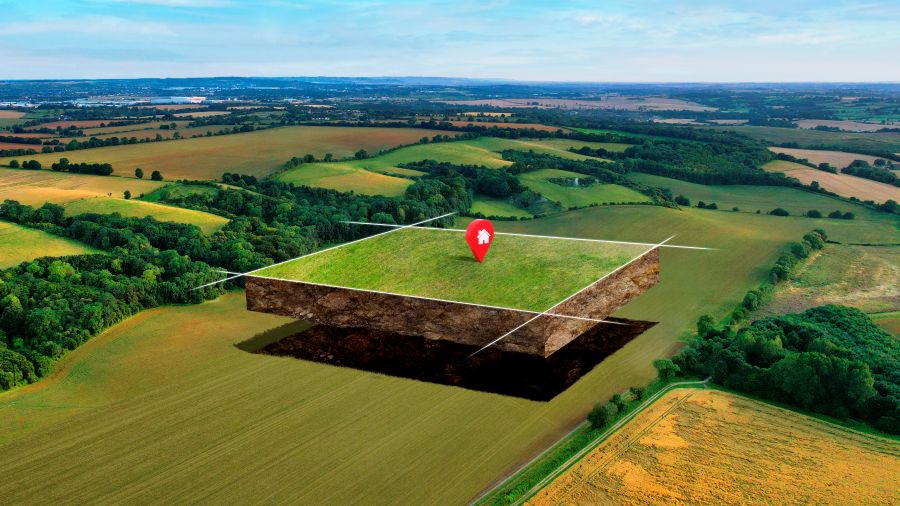
So you’re looking at land ads and keep seeing “1/4 acre” everywhere. What does that actually mean? How big is it really? And most important – is it enough space for what you want to build?
Let me break this down in the simplest way possible.
The Quick Answer: 1/4 Acre in Numbers
A quarter acre plot in Kenya is about 30 meters by 30 meters if it’s square-shaped. That gives you roughly 900 square meters of land.
Here’s another way to picture it: If you’ve seen those “100 by 100” plots that everyone talks about in Kenya, that’s basically a quarter acre. Same thing, different measurements.
In hectares (which is what you’ll see on your title deed), a 1/4 acre shows up as 0.101 hectares. Sometimes it’s a bit less – around 0.09 or 0.095 hectares – after they account for access roads.
Let’s Make This Visual
You know a standard football pitch? A quarter acre is about 1/8th of that.
Or think of it this way: You could fit two normal 50×100 plots (the ones people call “eighths”) inside a quarter acre.
If you’re more familiar with feet, that’s roughly 100 feet by 100 feet, which equals 10,000 square feet total.
On a 1/4 acre, you could fit:
- A tennis court (about 2,800 sq ft)
- A basketball court (about 4,700 sq ft)
- Your typical matatu parking space
- Standard Kenyan bungalows
- Olympic swimming pools
Converting Between Measurements (The Easy Way)
Land measurements in Kenya can get confusing because people use different systems. Here’s what you need to know:
Acres to Hectares:
- 1 acre = 0.404 hectares
- 1/2 acre = 0.202 hectares
- 1/4 acre = 0.101 hectares
- 1/8 acre = 0.05 hectares
Acres to Plots:
- 1 acre = 8 plots of 50×100
- 1/2 acre = 4 plots of 50×100
- 1/4 acre = 2 plots of 50×100
- 1/8 acre = 1 plot of 50×100
Quick tip for feet to meters: Divide by 10, then multiply by 3. So 100 feet = (100÷10) × 3 = 30 meters.
What Can You Actually Build on 1/4 Acre?
This is where it gets interesting. A quarter acre gives you real options.
Option 1: A Spacious Family Home
You can build a comfortable 4-5 bedroom house and still have plenty of space left over for:
- Parking for 2-4 cars
- A nice garden (front and back)
- A servant’s quarter or DSQ
- Maybe even a small swimming pool
- Space for kids to play
- A small vegetable garden if that’s your thing
Your house might take up 250-450 square meters, leaving you with at least 450-650 square meters for everything else.
Option 2: Four to Six Bedsitters (Rental Income)
If you’re thinking about rental income, you could build 4-6 modern bedsitters or single rooms. Each unit would have:
- One room with cooking space
- Own bathroom
- Individual electricity and water meters
- Shared or individual parking
Expected rental income: KSh 8,000-15,000 per bedsitter in satellite towns like Ruaka or Kitengela. That’s KSh 32,000-90,000 monthly from the whole plot.
Option 3: Two 2-Bedroom Units (Ideal for Young Families)
You could build 2 decent-sized apartments with:
- 2 bedrooms each
- Separate living rooms
- Own parking spaces
- Small outdoor area
Expected rental income: KSh 20,000-35,000 per unit in areas like Rongai or Syokimau. That’s KSh 40,000-70,000 monthly total.
Just make sure to check your county’s building regulations before you buy. They’ll tell you exactly what you can and can’t build. Read more about building approvals and permits in Kenya.
How Much Does a 1/4 Acre Cost in Kenya Right Now?
Prices are all over the place depending on where you’re looking. Here’s what you’ll actually pay:
Nairobi and Expensive Suburbs:
- Lavington/Kilimani: KSh 90-150 million (yes, really)
- Karen/Runda: KSh 40-100 million
- Kileleshwa: KSh 25-40 million
Satellite Towns (More Affordable):
- Ongata Rongai: KSh 2-5 million
- Ruaka/Ruiru: KSh 3-7 million
- Kitengela: KSh 1.5-3 million
- Juja: KSh 2-4 million
Other Cities:
- Mombasa (Nyali area): KSh 8-20 million
- Kisumu: KSh 3-8 million
- Nakuru: KSh 2-5 million
- Eldoret: KSh 2-4 million
Rural Areas (Best for Long-term Investment):
- Machakos: KSh 1-2 million
- Kajiado countryside: KSh 500,000-1.5 million
Prices change all the time, so always check current rates before you commit.
The Perimeter: How Much Fencing Do You Need?
For a square quarter acre (30m × 30m), you’ll need about 120 meters of fencing. That’s 400 feet all around.
Here’s what different fence types will cost you:
- Chain link: KSh 800-1,200 per meter = KSh 96,000-144,000 total
- Stone wall: KSh 3,000-5,000 per meter = KSh 360,000-600,000 total
- Brick wall with electric fence: KSh 4,000-7,000 per meter = KSh 480,000-840,000 total
Most people go for stone or brick walls in residential areas for security.
Before You Buy: The Checklist
Don’t just show up with your money. Here’s what you need to do:
Plan your finances: Compound Interest Calculator
1. Get a Land Search Done
Go to the Ministry of Lands or use the Ardhisasa portal. You want to check:
- Who actually owns the land
- If there are any legal issues with it
- If the size matches what they’re telling you
- If land rates are paid up
This costs around KSh 500-1,000 and could save you from a massive headache.
2. Hire a Surveyor
A licensed surveyor will physically measure the land and make sure:
- The boundaries are where they should be
- The size is actually what’s on the title deed
- There are no boundary disputes with neighbors
Budget KSh 30,000-80,000 for this. It’s worth every shilling.
3. Check the Title Deed Carefully
Look for:
- The correct size (around 0.09-0.101 Ha for a quarter acre)
- Current owner’s name
- Plot number and exact location
- Any restrictions or problems listed
- Proof that land rates are current
4. Visit the County Offices
Find out:
- What you’re allowed to build there (residential? commercial?)
- How much of the plot you can build on
- Setback rules (how far from boundaries you must build)
- If water, electricity, and sewerage are available
5. Go See the Land in Person
Never buy land you haven’t seen. Check:
- How you’ll get there (is there road access?)
- What the land looks like (flat? sloping? swampy?)
- What the soil is like (red soil is best)
- Who the neighbors are
- How safe the area feels
- What’s nearby (schools, hospitals, shops)
6. Get a Lawyer
A good lawyer will:
- Do all the legal checks
- Write up the sale agreement
- Make sure the transfer happens properly
- Register everything at the lands office
Expect to pay 1-2% of the land price for legal fees.
Red Flags to Watch Out For
Don’t buy land if:
- The seller won’t let you do a land search
- They’re in a huge rush to close the deal
- The price seems way too good to be true
- You can’t visit the actual plot
- There’s no clear road access
- The seller doesn’t have original documents
- Neighbors say there are boundary/ownership disputes
- The land is in a wetland or river reserve
Trust your gut. If something feels off, walk away.
Common Questions People Ask
Q: Is 1/4 acre big enough for a family home?
Yes, more than enough. Many nice homes in Nairobi suburbs sit on quarter-acre plots. You’ll have space for the house, parking, and a garden.
Q: Can I split a 1/4 acre into smaller plots?
You can, but you need county approval. Rules about minimum plot sizes change depending on where you are and what the zoning allows.
Q: How do I know if the measurements are accurate?
Hire a licensed surveyor. They’ll measure everything and compare it to what’s on the title deed. Don’t skip this step.
Q: What’s better – freehold or leasehold?
Freehold means you own the land forever. Leasehold means you have it for a set time (usually 99 years). Freehold is better if you can get it.
Q: Should I buy in a gated community or standalone?
Gated communities cost more but offer better security and maintained roads. Standalone plots are cheaper but you handle security yourself.
What Makes Land Value Go Up or Down
Your quarter acre will be worth more if it has:
- Easy access to main roads
- Electricity and water already connected
- Good security (or is in a gated community)
- Schools, hospitals, and shops nearby
- Room to grow in value (new roads or developments coming)
It will be worth less if it’s:
- Hard to reach (bad roads, no access)
- In an area with security problems
- Too far from amenities
- On poor soil or swampy ground
- Missing a clear title or has legal issues
Final Thoughts
A quarter acre in Kenya is a solid amount of land. It’s big enough for a real family home with space to breathe, but not so big that you’re overwhelmed with maintenance.
Before you hand over any money:
- Do the land search at Ardhisasa
- Hire a surveyor
- Visit multiple times
- Get a lawyer involved
- Check county regulations
- Compare prices in the area
Take your time. Good land isn’t going anywhere, and rushing into a bad deal will cost you way more than being patient.
Got friends looking to buy land? Share this with them. Everyone needs to know what they’re getting into before they buy.
Helpful Calculators & Tools
Loan Repayment Calculator – Plan your land purchase financing
Government Resources
- State Department for Lands – Official land registration and information
- Ardhisasa Land Portal – Online land searches and services
- National Land Commission – Land policy and administration
- Kenya Law – Land Registration Act 2012 – Full legal texts
- Physical Planning Act – Building and zoning regulations
Remember: If you’re serious about buying land in Kenya, work with licensed professionals. The few thousand shillings you spend on proper checks could save you millions in problems later.
.